
A small subtraction from the River Add

Edition of bottled water, Cairn Editions 2012
£25.00 plus postage


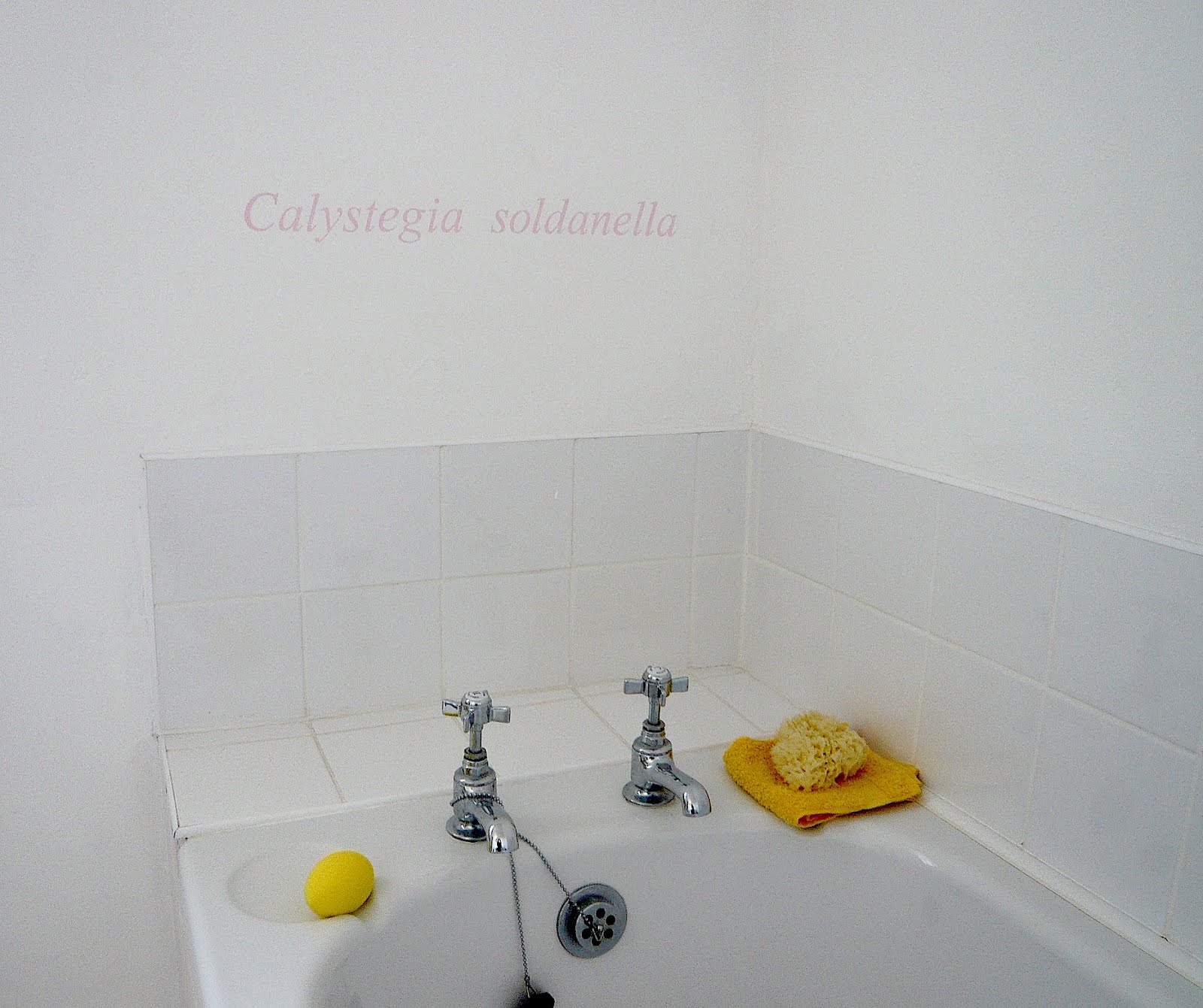

If a piece of card is folded once, an astonishing thing happens – the card can stand up ! It has an air of self-possession about it. It holds its place.
If the words are then printed on the front of the card, rather than inside, something equally miraculous occurs – poetry moves from the private into the public realm ! Instead of being assigned to a secluded, literary space, it enters the ordinary, everyday world, taking part in the occasion.
The words are not painted on a wall or carved in stone. The card is a modest format. It sits quietly within the situation, making a difference, suggesting another possibility.
Our relation to literary products is usually voluntary; you go to the shelf to find the book to look up the poem. By contrast, a card is available at a glance. You can forget it for days or weeks and then come into a room and discover it again. It takes you by surprise.
The model fishing boat in the photograph was made by Ian Hamilton Finlay who, in 1965, invented the ‘standing poem’.

In the semiological theory of Saussure and Barthes, a first-order level of signs (the level of assigned meanings, or denotation) is augmented by a second-order level (of associations, or connotations). Behind the apparent meaning is an ideologically-motivated set of cultural assumptions on which the meaning draws.
But connotations are notoriously vague. They are as likely to lead, in reverie, to the dissolution or diversion of meanings as to their condensation. Poetry seems to be an art that hesitates and hovers, keeping the uncertainty of connotations in play for as long as possible.
These days, no one knows the names of butterflies, so for a brief moment the words of the names can float free from any indicative function, their colours released.

If you want to make a poem, rather than write one, then its form will be an immediate concern. No one makes anything without a clear shape in mind. Although the shape might change in the making, some formal intuition will be necessary to get you started.
While the notion of writing is fluid, making is static and hard-edged. Where writing might run on forever, or for as long as its impetus lasts, making has an end in view, a finished object in some way answering desire.
To regard poetry as making, as a practical rather than an intellectual activity, is common to the Concrete poets, the Objectivists, and to old Scottish ‘makars’. It offers a middle way between a ‘free’, or formally lax mainstream poetry, and a more ‘experimental’ poetry that deconstructs, divides or diverts whole streams of language.
When you have made a few poems, cards or books, they amount to a satisfying pile, having weight, volume and presence. They can sit on the table for a while before heading off on their own adventures.

